The White House finally came forward last week with the decision not to circulate the graphic images that confirmed Osama Bin Laden’s death, and I immediately I believe I heard people around the U.S. (and the world, perhaps?) breathe a mostly collective sigh of relief. Or was that just me?
It is a favorite pronouncement that we are now an image-driven culture, focused chiefly on video, photos, and graphics to learn, retain and discuss the world around us. This pronouncement is made, particularly, in the context of discussions about the RSS-ification of news and information, where all the news that’s fit to print is expected to fit into 140 characters.
See, as the thinking goes, our brains are attempting to consume so much more information than ever before, so the introduction of new forms of media and imagery (read: not text) will help our brains to better retain and render more realistic those discrete and fast-coming pieces of information.
Whatever the strategy of getting information to us, as consumers of information, it is still worth fighting for the chance to use our own discretion when it comes to how we, as humans, want to digest our information. Often we seem to have no choice- the newspapers, site managers, TV and movie producers and editors do that for us. But when we are presented with the choice, many of us would still choose not to see graphic images of death and violence.
[I can already hear the devil on my shoulder wanting to advocate for his side of the story, so as an aside, I will say that I do believe there is power in images. And I believe that things can be rendered more real in our everyday lives by seeing them, even if only through a photographer’s lens. That is often a good thing, particularly for the politically sheltered and/or apathetic masses. But I also believe that things can be too real, and hinder a person’s ability to move on with their life. Or images can be so real, but so simultaneously staggeringly outside the context of someone’s own experience that they are unreasonably and ineffectively disturbing. I believe the release of images of OBL’s death would have such an effect for many Americans.]
Which is why, I believe, so many Americans have keyed in on the photo taken by the White House photographer and posted on their Flickr feed, of Obama’s staff watching the live feed of the raid in Pakistan.
This photo has become the focal and symbolic photo of the moment that OBL was killed, and has stirred so many different reactions. For me the photo is staggering on a number of levels:
1) President Obama is not front and center.
2) The expression of Secretary of State Clinton’s face (whether she likes it or not)
3) The fact that we are experiencing the ultimate surveillance moment- through the eyes of someone who was watching the scene through a camera lens, we are watching those who are watching live footage of what was happening.
4) It is perfect voyeurism, but it is also intensely primal. We are observing the reactions of other human beings to an event we know we must also react to. In their reactions we search for our own feelings about the event, and we take cues.
Incredibly, in their recent Opinionator entry, Gail Collins and David Brooks brought up pretty much everything that I was thinking when I first saw this photo, but it’s something I think everyone should take a look at, because there is so much to discuss within the limits of this image.
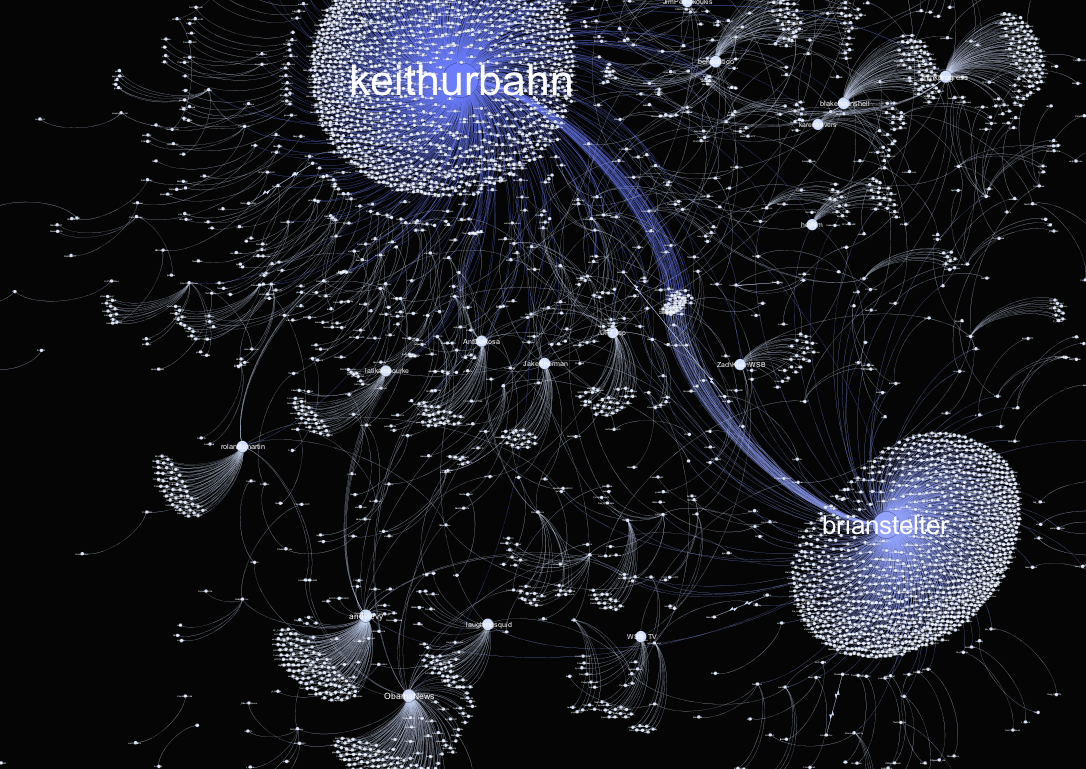
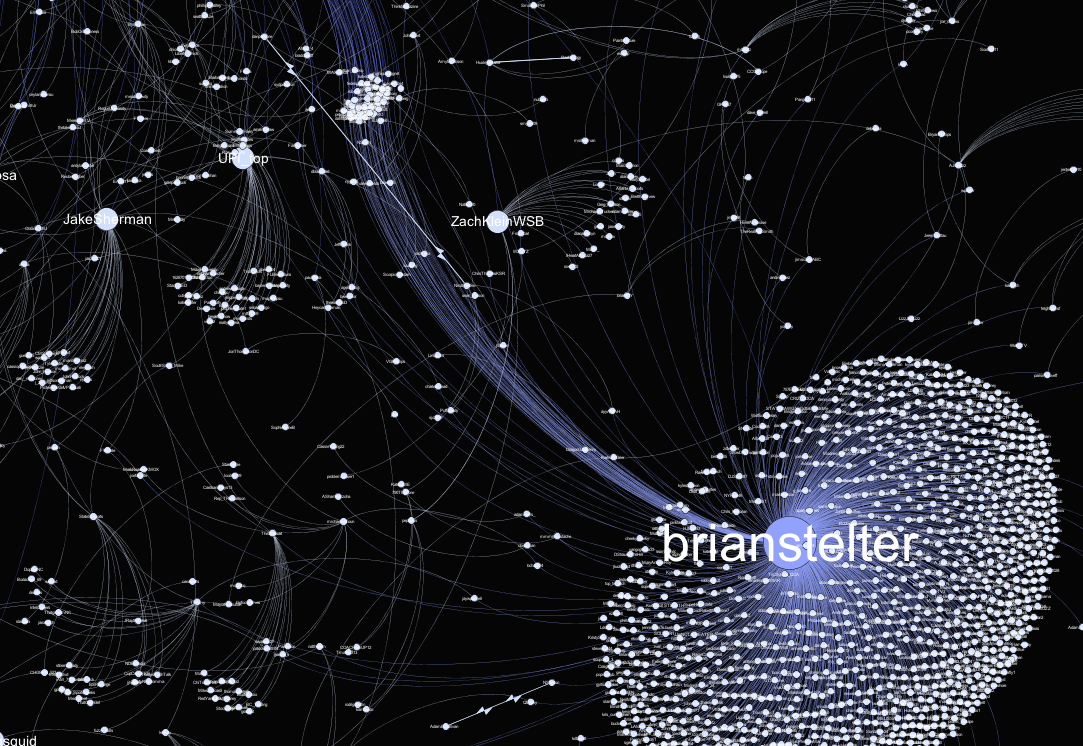
On a similar note, and related to my earlier post about the news of Bin Laden’s death and the role of Twitter in breaking that news, here are some outstanding digital images of the flow of information across the Twitter-verse in the hours preceding and following the White House announcement, care of the SocialFlow blog.

For those of you who are unfamiliar with the company, SocialFlow is a “social media optimization platform that is used …to increase engagement (clicks, re-tweets, re-posts and mentions) on Twitter. Our technology determines the optimal time to release the right Tweet based on when your audience is most receptive.”

 RecreationCommunication