The White House finally came forward last week with the decision not to circulate the graphic images that confirmed Osama Bin Laden’s death, and I immediately I believe I heard people around the U.S. (and the world, perhaps?) breathe a mostly collective sigh of relief. Or was that just me?

It is a favorite pronouncement that we are now an image-driven culture, focused chiefly on video, photos, and graphics to learn, retain and discuss the world around us. This pronouncement is made, particularly, in the context of discussions about the RSS-ification of news and information, where all the news that’s fit to print is expected to fit into 140 characters.

See, as the thinking goes, our brains are attempting to consume so much more information than ever before, so the introduction of new forms of media and imagery (read: not text) will help our brains to better retain and render more realistic those discrete and fast-coming pieces of information.

Whatever the strategy of getting information to us, as consumers of information, it is still worth fighting for the chance to use our own discretion when it comes to how we, as humans, want to digest our information. Often we seem to have no choice- the newspapers, site managers, TV and movie producers and editors do that for us. But when we are presented with the choice, many of us would still choose not to see graphic images of death and violence.

[I can already hear the devil on my shoulder wanting to advocate for his side of the story, so as an aside, I will say that I do believe there is power in images. And I believe that things can be rendered more real in our everyday lives by seeing them, even if only through a photographer’s lens. That is often a good thing, particularly for the politically sheltered and/or apathetic masses. But I also believe that things can be too real, and hinder a person’s ability to move on with their life. Or images can be so real, but so simultaneously staggeringly outside the context of someone’s own experience that they  are unreasonably and ineffectively disturbing. I believe the release of images of OBL’s death would have such an effect for many Americans.]

Which is why, I believe, so many Americans have keyed in on the photo taken by the White House photographer and posted on their Flickr feed, of Obama’s staff watching the live feed of the raid in Pakistan.

This photo has become the focal and symbolic  photo of the moment that OBL was killed, and has stirred so many different reactions. For me the photo is staggering on a number of levels:

1)      President Obama is not front and center.

2)      The expression of Secretary of State Clinton’s face (whether she likes it or not)

3)      The fact that we are experiencing the ultimate surveillance moment- through the eyes of someone who was watching the scene through a camera lens, we are watching those who are watching live footage of what was happening.

4)      It is perfect voyeurism, but it is also intensely primal. We are observing the reactions of other human beings to an event we know we must also react to. In their reactions we search for our own feelings about the event, and we take cues.

Incredibly, in their recent Opinionator entry, Gail Collins and David Brooks  brought up pretty much everything that I was thinking when I first saw this photo, but it’s something I think everyone should take a look at, because there is so much to discuss within the limits of this image.

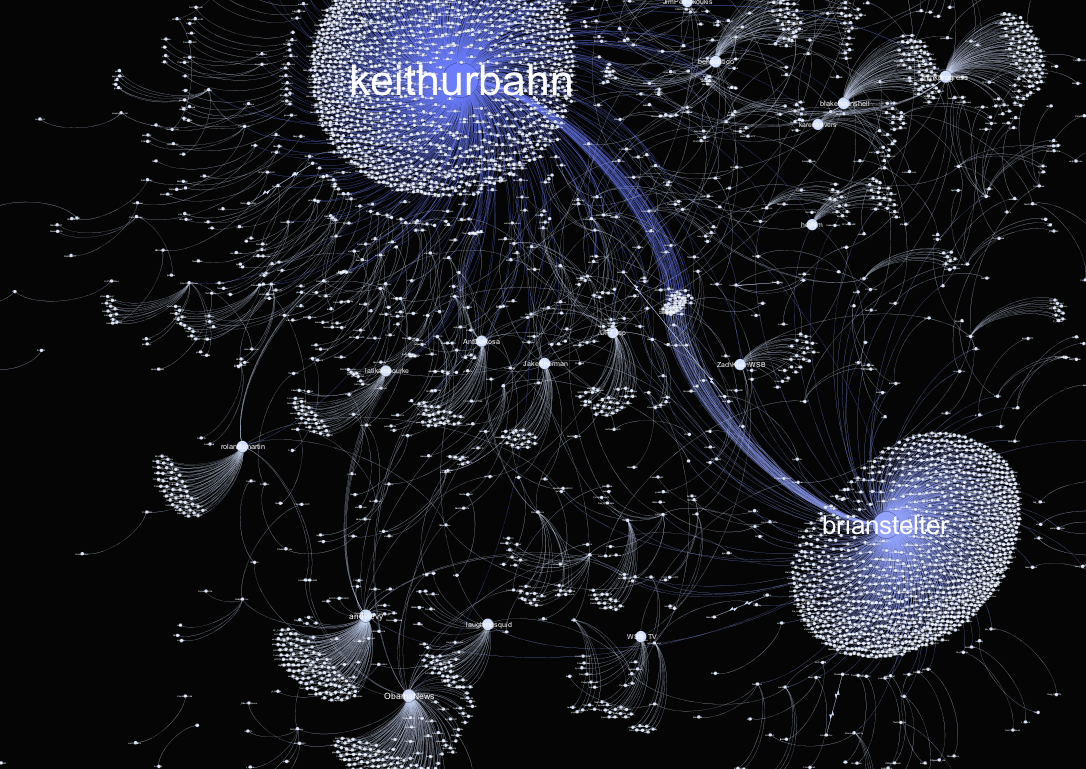
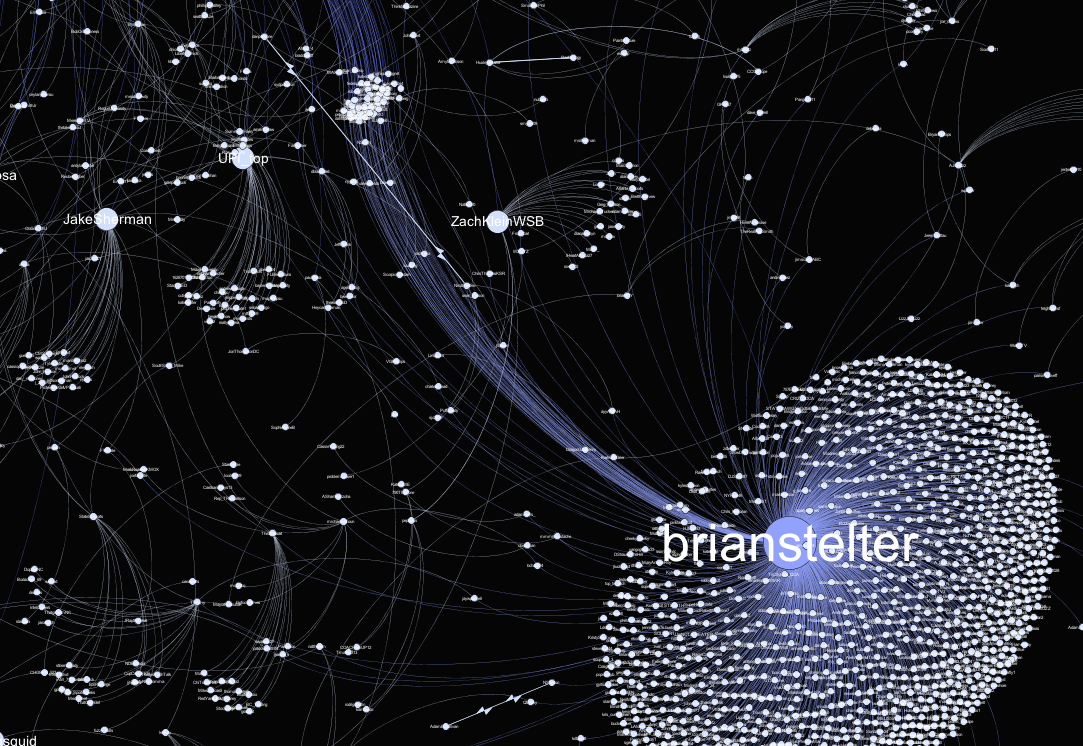
On a similar note, and related to my earlier post about the news of Bin Laden’s death and the role of Twitter in breaking that news, here are some outstanding digital images of the flow of information across the Twitter-verse in the hours preceding and following the White House announcement, care of the SocialFlow blog.

For those of you who are unfamiliar with the company, SocialFlow is a social media optimization platform that is used …to increase engagement (clicks, re-tweets, re-posts and mentions) on Twitter. Our technology determines the optimal time to release the right Tweet based on when your audience is most receptive.”


(Full disclosure: While living in France, I worked with Soumitra Dutta and INSEAD’s eLab on a social media marketing project for a book he co-authored with Professor and Social Media Strategist Matthew Fraser.)

Happy Monday, all.

A few weeks ago I received links to the “2011 Global information Technology Report” from Soumitra Dutta, one of the co-authors of the annual report and Academic Director of INSEAD’s  eLab, an academic division of the university that pursues “thought leadership, community outreach and value creation in the global knowledge economy.” The report is published annually by the World Economic Forum in partnership with INSEAD, and this year marks the report’s 10th anniversary.

For those unfamiliar with the report (as I had been), it centers around the analysis of the impact of Information and Communication Technologies (which is refers to as ICT) on the global landscape. Perhaps most notably, the WEF created an index called the “Networked Readiness Index” or NRI through which to glance at the progression of ICT throughout the world, and to gauge its expansion on a quantifiable level. As the 2011 Global Information Technology Report states, the NRI “has mapped out the enabling forces driving networked readiness, which is the capacity of countries to fully benefit from new technologies in their competitiveness strategies and their citizens’ daily lives.”

While this is also the first edition I have read, I’ve found that the report touches on some highly pertinent and evocative information. In fact, the NRI’s stated goal touches on a point I heard during a recent conference I had the privilege to attend.

During his presentation, one of the featured speakers made the point that, in terms of disruptive innovation, often technologies are first invented and introduced to the mass public, where early adoption of those technologies then occurs. However, after the initial release of the new technology and relative levels of user traction occur the really outstanding leaps in innovation come from subsequent innovators in the space- in plainer terms, the guys who came second.

When those leaps of innovation occur, often they occur to such an extent, that the full range of technological capabilities contained within that new technology are not actually utilized by their users. In other words, the range of innovation often significantly outpaces the rate of user adoption and mastery of that technology.

I believe the same could be said for the relative rates of disruptive innovation and the global adoption of new technologies. For instance, much in the 2011 Global Information Technology Report (henceforth GITR) centers on the adoption of mobile technologies and their use in emerging economies- while smartphones get ever smarter in Asia, with mindboggling new capabilities introduced to Japanese, Korean and Chinese populations on a near daily basis, basic mobile networks and mobile phone adoption has only just begun to really soar across Africa.

I’m still making my way through the reports chapters which are guest-authored by various tech and economics luminaries, but in subsequent entries I’m hoping to tie some of these chapters back to trends I’ve observed in recent days and days still to come.

Wanted to give you all the head’s up, and invite you to read the report if you so desire. It can be found here: “2011 Global information Technology Report”.


Last night at about 8:45 pm PT I found out that Osama Bid Laden had been killed. Here’s how that went down:  My brother picked up his iPhone, glanced through his Twitter feed and announced the news as we were waiting for the opening credits for an action movie we had come to see to close out our Sunday nights.

It being Twitter, I suspended disbelief, but felt reasonably confident that the news was true, given the groundswell of information being tweeted about it. And then I moved on with my evening.

Is there anything wrong with that?

Yes. And, no.

Yes, because it was truly a momentous event. It was, in many ways, the culmination of 10 years of searching and frustration, made and broken political careers, physical demonstrations of strength and power, alarmed admissions of weakness and ignorance, aggression and intolerance, inner turmoil and acceptance, American tragedy and dark, dark American comedy. And all I did was continue to sit in my seat and watch a very sub-par movie.

No, because I knew that the next few days would unfurl themselves before me in a constant stream of information about his whereabouts for the last ten years, where he was killed, how he was killed, Obama’s thoughts on his death, everyone’s thoughts on his death, analyses of how this will affect the Presidential race, pronouncements of how this will affect Obama’s legacy in office, and general societal responses to the news of his death. And I would be there to read, watch, listen to, and ingest it all.

The thing about fast-breaking news these days is that it breaks, and it continues to break like a wave hitting the continental shelf over and over and over. This phenomenon gives modern news consumers time to digest that information from all chosen angles, from all chosen sources.

All of that, and all I’m really taking away from this news is a) I am utterly relieved to see a contingent of contacts within my sphere who are conflicted about unabashedly cheering someone else’s death-even if that person is arguably the most hated man of the 21st century. This contingent includes my brother, a member of the U.S. Army Reserves, who was twice deployed to Iraq.

I continue to believe that the greatest American patriots in the world are those who continue to question, and- where fitting- condemn, the loss of life as a necessary price of freedom and security, and who query our government about whether the loss of life abroad is a necessary precondition for maintaining American democracy.

In related news, an obituary for Osama Bin Laden in the NYTimes? A poignant statement in the city that lost the most at his hands.


The fallacy that social media platforms such as Facebook provide “two-way communication,” or a “virtual dialogue” is getting a day in the sun today, following President Obama’s “Town Hall at Facebook headquarters yesterday. While on the surface, media enthusiasts and modern-day communications professionals choose to see Facebook as the future of interactive social media due to live streaming capabilities, instant messaging, Q&A mechanisms, and the ability to cull an audience of thousands, yesterday’s Town Hall event proved that nothing beats a physically present audience.

As the SFGate (SF Chronicle) article declared, “Despite the promise that President Obama’s first Facebook town hall would open a new level of two-way communication with his constituents, social-networking technology didn’t add much to the conversation.”

In all, the President answered eight questions, a few of which were asked by the physically present audience of Facebook employees, and ignored hundreds which were posted by the thousands of virtual attendees. As the SFGate article quotes, “Cynthia Spurling posted: ‘What a joke Facebook! So glad you had this town hall for your employees. The Ask Question button is a joke!’”

As a President of the people, and as a politician campaigning for re-election, why would he do such a thing?

Well, how much time do you have? How about:

A)     A politician is always trained to play to the flesh and blood right in front of him or her, because he can see their eyes, their expressions, and he or she is trained to digest that physical information, as an orator, to sway an audience one way or another. But hell, the normal human reaction is to play to the live audience right in front of you, so that’s not saying much.

B)      The physical audience was a group of employees of Facebook, a cutting edge technology company that employs young, top tier people from all over the country, meaning most of them are equipped with at least a bachelor’s degree, if not a master’s. And historically, studies have suggested that a higher level of attained education generally correlates to a more liberal standpoint among Americans.

C)      Facebook HQ is located in California, a very liberal state.  Thus the President is keenly aware that the average person in the room will be more aligned with his own political standpoints and the standpoints of his party. Knowing that, and knowing he can field their softball questions, why would he cater to the wildcard attendees from other states?

Saying all this, you probably won’t believe it, but I should disclose that I am a big Obama fan. I mean, a BIG OBAMA FAN. But this is just common sense. What I find interesting about it from the communication point of view is not the choices that were made by his team to keep him on the “safe” side of rhetoric, but how surprised people seem to be that he basically ignored the online audience.

Yes, we have become a very virtualized population of individuals, often more comfortable with interacting with screens and mobile devices when given the choice between that and a real person. But the actual act of speaking publicly has not changed much. A skilled orator thrives off of the energy he or she receives back from an audience, and the computer, iPad, iPhone, or Android screens don’t offer any love back.

As I’m wrapping this up, I need to mention what a theater professor of mine once said. This has stayed with me every day of my life. He told us, “don’t ever agree to appear on stage with babies, small children or animals. They will upstage you ever time. The difference is their authenticity of emotion, of movement, of reaction. The second you step on stage with them, you have already lost the audience’s attention to their absolutely authentic behavior, which no actor can match.”

How does this correlate to the fallacy of interactivity, as proven by yesterday’s Facebook Town Hall? The same rule, it would seem, applies to “don’t ever agree to attend a webcast or live streaming event if you know there will be people in the room, physically, with the performer or speaker.” As the virtual audience, you will always lose. The physical audience will upstage you every time.


Recreation– rec·re·a·tion/ˌrekrēˈāSHən/Noun

1. Activity done for enjoyment when one is not working.
2. The action or process of creating something again: “the periodic destruction and recreation of the universe”.

WikipediaAnswers.comMerriam-WebsterThe Free Dictionary

Communication– com·mu·ni·ca·tion/kəˌmyo͞oniˈkāSHən/Noun

1. The imparting or exchanging of information or news.
2. A letter or message containing such information or news.
3.  The means of sending or receiving information, such as telephone lines or computers

WikipediaDictionary.comAnswers.comMerriam-Webster

If you give a girl a Master’s  degree in “Global Media and Communication,” what’s she supposed to do with all of that academia in her brain? I feel as if the average person never uses roughly 80 per cent of what they learned in school for their jobs. So where does that information go? Who knows? I could believe it recedes, disappears into the grey matter of your brain where information goes to die if it is no longer used.

Quite simply, this blog seeks to use the information I’ve culled from my education and from just living a 21st century life- to analyze the world around us. As I see it, pretty much everything we’re doing, creating, debating, and using these days relates to communication in some fundamental way, so I’ll be exploring that here.

Welcome to RecreationCommunication!


In March of 2011, Pelago, the company known for having produced Whrrl, wrote a mini essay detailing their ideas about a concept they labeled “anti-search.” Anti-search, they claimed, was a movement in search of “serendipitous world discovery,” writing: “Search engines are good at addressing those “high intent” situations, like “where’s the closest Starbucks?” or “what kind of food does this place serve?” or “how are the reviews for this restaurant?”  You know what you’re looking for and it’s easy to express your intent as a query” and continues, “Serendipity is “zero intent” discovery, i.e. when you aren’t actually looking for something, but a great idea finds you.   Between these two extremes are discovery missions of varying degrees of intent, e.g. “I’m hungry” or “I’m bored.”

Which they represented by this interesting little graphic:

For me, this brings up the question, has the deliberate searching and querying of our surroundings via technology– whether those surroundings are natural or unnatural—really precluded the opportunities for actually, well, discovering places and things? Is there a chance that with the proliferation of location aware technologies, and geographic social mobility coupled with mobile internet access, we are no longer actually capable of physically seeing and interacting with what is actually around us? Are we completely incapable of tripping down a little ivy-laden alley and discovering a mural, or a coffee shop, or a funky shoe store without the aid of a mobile device or online coupon website?

According to Pelago, anti-search is comprised of three elements:

  1. “The right data in order to “know” a user.  I.e. user actions like check-ins, the social graph, interactions among users (which I’ll talk about in a second), etc.
  2. The right algorithms.  We need to take all this data and turn it into personalized recommendations.
  3. The right social ecosystem.  This is decidedly the hardest part.  The necessary content and data is locked up in people’s heads and hearts – we need to make it motivating and easy to get that content out, to get people taking the necessary actions to create the data to feed the algorithms that ultimately allow us to provide an amazing discovery experience.” (http://www.pelago.com/blog/community/2011/03/its-time-for-real-world-anti-search/)

But I would argue that the act of discovery does not rule out the possibility that the discoverer will stumble upon something they don’t like, something they wouldn’t have chosen. I would also argue that to prevent each of us from doing so is robbery, plain and simple, of the experience being challenged in our sense of taste. How are we supposed to define what we don’t like about something if we’re never faced with the distasteful something in the first place?

Besides, the word serendipity – in part- refers to an unintended experience. How can you possibly achieve that if your intention is to plug a social recommendation engine full of data to steer you towards intended unintended situations or experiences?

Which is why, with Groupon’s reported acquisition of Pelago, the whole ridiculous ethos of these sites and recommendation engines (which are, at their heart, merely designed to sell you things) has come full circle in a doomed cycle of self-mockery.

This acquisition clearly runs counter to Whrrl’s stated “anti-search” goal of “serendipitous world discovery.”

Case in point: how many among us have purchased at least one Groupon at this point (i.e. are unique Groupon users)? There aren’t any real numbers on that at this point, but it’s safe to say that number is in the millions, given that the number of Groupons bought at the time that this was published was in the 40 million range. Yet how many of us have subsequently struggled to find the time or the energy to use said coupon, or let the coupons pile up until one or two have expired without being used? I’d wager that number is in the high hundreds of thousands, if not also in the millions.

So someone tell me how that’s not intent or a deliberate attempt to make the time to go somewhere and use something that was purchased with that specific intent in mind. It’s not serendipity, it’s a scheduled appointment to go spend money at a pre-determined location.

At the risk of sounding like a complete luddite, the next time someone wants to indulge in a little “serendipitous world discovery,” I would honestly recommend that they go for a walk in their neighborhood- no headphones, no phone- just them and the buildings, parks, animals, and people around them.


October 19, 2010- http://www.gather.com/viewArticle.action?articleId=281474978616790

Remember that scene in the film Back to the Future where Marty McFly realizes that in the photo he carries of his family, he is fading from existence because of the events of the past not transpiring as they should? As a result, he faces the possibility that the shape of his family will change forever? Well, as it turns out, that’s not necessarily impossible.

At least, not according to one of the lead designers and developers at Mozilla, Aza Raskin, Creative Lead for Firefox. During his keynote speech at the University of Michigan School of Information Raskin claimed “the human brain’s predictable fallibility leaves us susceptible to the creation of false memories by brand marketers through retroactive product placement into our photos posted on Facebook and other social networks,” and his assertions are getting a lot of coverage. Raskin, only 27 years old, is one of Mozilla’s most talented innovators, and thus his arguments are by no means falling upon deaf ears. In essence, he’s predicting that social networks will modify our uploaded photos to include product placements and therefore modify our memories.

Specifically addressing the advertising and marketing potential involved in this ploy, Raskin claimed, “We will have memories of things we never did with brands we never did. Our past actions are the best predictor of our future decisions, so now all of a sudden, our future decisions are in the hands of people who want to make money off of us.”

During the talk, to bolster his cautionary predictions Raskin touched upon neurological research into memories and cited the Hollywood blockbuster Inception, which addressed the future potential to tap into and manipulate dreams and memories. This concept of subliminal advertising was also recently addressed in a viral video created by UK illusionist Derren Brown, “Subliminal Advertising,” where the practice of advertising is turned on its head when two high-end advertisers are manipulated into spontaneously generating a pre-determined pitch for a product.

Raskin’s keynote came at an unfortunate time for Facebook, who this week is once again suffering intense scrutiny for their privacy practices. As the New York Times argued, “When you sign up for Facebook, you enter into a bargain…At the same time, you agree that Facebook can use that data to decide what ads to show you.” Yet it was Mark Zuckerberg, the much publicized chief of Facebook, who this week apologized to his users for overly complicated site settings and acknowledged that some app developers on its site shared identifying information about users with advertisers and Web tracking companies.

However, as the New York Times reports, “Facebook has grown so rapidly, in both users and in technical complexity, that it finds it increasingly difficult to control everything that happens on its site.” If you consider that Facebook still claims just over 1,700 employees it seems unlikely that in the next few years the social media Goliath will grow rapidly enough to expand their advertising model to modify users’ uploaded content such as photos and videos. Nor is it entirely clear why they would want to do such a thing, given how infrequently users tend to re-visit their photos even weeks after they have posted them.

On the other side of the U.S., U.C Berkeley professor and privacy expert Deirdre Mulligan had this to say about Facebook: “This is one more straw on the camel’s back that suggests that Facebook needs to think holistically not just about its privacy policies, but also about baking privacy into their technical design.”

In the meantime, perhaps we should all pop some ginkgo biloba and back up the current versions of our photos- just incase.


October 19, 2010- http://www.gather.com/viewArticle.action?articleId=281474978616650

This last week a number of well-respected analysts and research centers released reports discussing the pervasive dominance of “post-PC devices.” Specifically the discussion is revolving around mobile phones, smartphones, tablets and e-readers. The Pew Research Center released its report on “gadget ownership” which demonstrated the overall dominance of cell phones in the U.S. Technology market. Pew surveyed 3,001 American adults and decided upon the “key appliances of the Information Age.” Those which came out on top were cellphones, PCs, e-readers, and Mp3 players.

Gartner and Forrester also threw their hat into the “buzz” ring. Gartner released its own report Friday which proclaims tablets the new cellphone. In the study Gartner reports that tablet sales have reached 19.5 million units this year and estimated that tablet sals would increase to 150 million units by 2013. In fact, Carolina Milanesi, a research vice president at Gartner, claims mini notebook computers “will suffer a “strong cannibalization” as the price of media tablets” drops nearer to the $300 mark.

In their report, Forrester chose to address head-on the new era security concerns that companies and consumers will experience as society continues to adopt these post-PC devices. In its report, Forrester discusses the additional security companies will have to implement for mobile devices commonly now used both at work and at play.

Yet as these respected analysts hail the new post-PC era, tablets and e-readers are still exploring the new hazards of a post-PC world. Just this week the New York Times posted an article which discusses the temperature control problems for Apple’s iPads and compares it to Amazon’s Kindle. Or, as the New York Times wrote it, “It seems that some iPads do not like direct sunlight, saunas or long walks on the beach.” And with the iPhone 4G’s antenna challenges earlier this summer, it’s clear that we’re nowhere near having worked out all of the kinks even as the mobile device market continues to innovate and we adopt their emerging products.


October 15, 2010- http://www.gather.com/viewArticle.action?articleId=281474978605059

Oh goody, as the New York Times reported on October 10th, Twitter has finally come up with a plan to make money. Only, it’s the old new plan, which is to say it’s the same plan as everyone else.

As Twitter’s Evan Williams stepped down, to make room for Dick Costolo who previously headed Twitter’s advertising program as the new CEO, the tech industry remarked on how the shuffle represented Twitter’s increased new commitment to monetization.

As the New York Times reported, “Twitter’s startling growth — it has exploded to 160 million users, from three million, in the last two years — is reminiscent of Google and Facebook in their early days. Those Web sites are now must-buys for advertisers online, and the ad industry is watching Twitter closely to see if it continues to follow that path.”

But there still seems to be no real innovation in the advertising models of hi-tech companies from whom the world expects a great deal of innovation. Why are hi-tech social media and social news aggregation companies having such a hard time innovating with their monetization strategies?

At this point, each new social media platform that comes along seems to jump into the online advertising market that Google forged largely on its own. Now that Google did the heavy lifting on education and we all speak and understand the language of “click-thru rates,” “impressions,” and “search engine optimization,” newcomers like Twitter don’t have to pay or do very much in order to enter this monetization space. Coincidentally, it would seem that they aren’t doing very much at all to evolve it.

As a result, the whole online ad framework is falling flat, and after a few years of evangelizing for social media advertising and the use of new media platforms like Twitter and Hulu, are advertisers really making more money and seeing the benefits of these new media? It’s becoming an embarrassingly redundant question- “yes, we know we are creating funny and entertaining media for our consumers to enjoy, but is it actually increasing sales?”

Interestingly, at this year’s gathering of the Association of National Advertisers, as the New York Times reported, a survey at the beginning of the opening session found that “marketers may still need some schooling on the dos and don’ts of social media. Asked to describe how its use has affected sales, 13 percent replied that they did not use social media at all. (Eleven percent said sales had increased a lot, 34 percent said sales increased ‘some’ and 42 percent said they had seen no change.)”

It would seem that media analysts are continuing to approach social media and search as a given element of any marketing strategy without any hard evidence as to why every company needs to integrate social media into their market strategies. Instead, without the numbers to make the case, analysts and marketeers still discuss the virtues of earned media versus paid media, the value of eyeballs and impressions, and earned equity.

One of this year’s smashing social media success stories has a particular ability to make marketers foam at the mouth. 2010’s Proctor & Gamble “smell like a man” campaign for Old Spice helped increase the brand’s followers on Twitter by 2,700%, to where they “now total almost 120,000.”

Marc Pritchard, global marketing and chief branding officer at Proctor and Gamble had his moment in the sun for what was, undoubtedly, the most high-profile and successful example of how modern brands can use social media to promote their brands. But in the coverage of Pritchard’s talks, there is little to no mention of how the campaign is actually impacting the company’s bottom line. Instead, there is this: “The currency the campaign has earned in social media has pushed it into the popular culture. Mr. Pritchard showed the audience a spoof that was recently introduced by Sesame Workshop in which Grover suggests that his young viewers ‘smell like a monster on Sesame Street.’

But an internet meme does not a year over year increase in sales make. There is no mention of how an increase in followers on Twitter converts itself into a percentage increase in sales. It’s like an equation is missing, or somehow we have all misunderstood how to connect the dots. At the conference Joseph V. Tripodi, chief marketing and commercial officer for Coca Cola was interviewed, and his only contribution to this dilemma was to discuss how social media can sometimes save a company money on promotions through viral videos, “It cost less than $100,000 to produce the video, he added, demonstrating that “you don’t need huge amounts of money to engage with consumers.” However, savings on a marketing budget also do not a sales increase make.

Refreshingly, one of the conference’s keynote speakers, Mark Baynes, vice president and global chief marketing officer at the Kellogg Company, did acknowledge the missing link in the social media to profits equation by proclaiming, “In God we trust; the rest of you bring data.”


October 08, 2010- http://www.gather.com/viewArticle.action?articleId=281474978584428

MTV and Foursquare are being recognized by Mashable as one of the most creative social media campaigns of 2010 for their efforts on the first-ever cause-related badge: GYT. In September of this year, FourSquare and MTV partnered to launch the GYT campaign, which stands for “Get Yourself Tested.”

The campaign seeks to promote STD testing among young adults by offering them the GYT badge of courage for checking in at an STD clinic. As reported on Mashable, “The Foursquare partnership encourages people to follow MTV on Foursquare, check in after getting tested and shout “GYT” to their followers. After doing so, users will earn the GYT badge, and thereby make it known that they’re taking control of their sex lives. Those who score the badge will also be entered to win a trip for two to New York City, as well as backstage passes to MTV’s 10 on Top.”

Despite the offer of a trip and backstage passes, one would think that the still-widespread cultural stigmatization associated with STD testing would keep users away from this campaign. Yet the campaign has achieved a solid amount of success, with more than 3,000 GYT badges awarded since the campaign was launched a few weeks ago.

The campaign is most definitely a vital first, and a great example of how geo-location technologies may help non-profit organizations all over the world to mobilize and support positive causes. It remains to be seen how many non-profits are able to capitalize on the success of this particular campaign, and use location-aware technologies to aid in the struggle to promote their own causes.